Choosing the right stone-cutting technology can directly affect cutting accuracy, production efficiency, material wastage, maintenance…
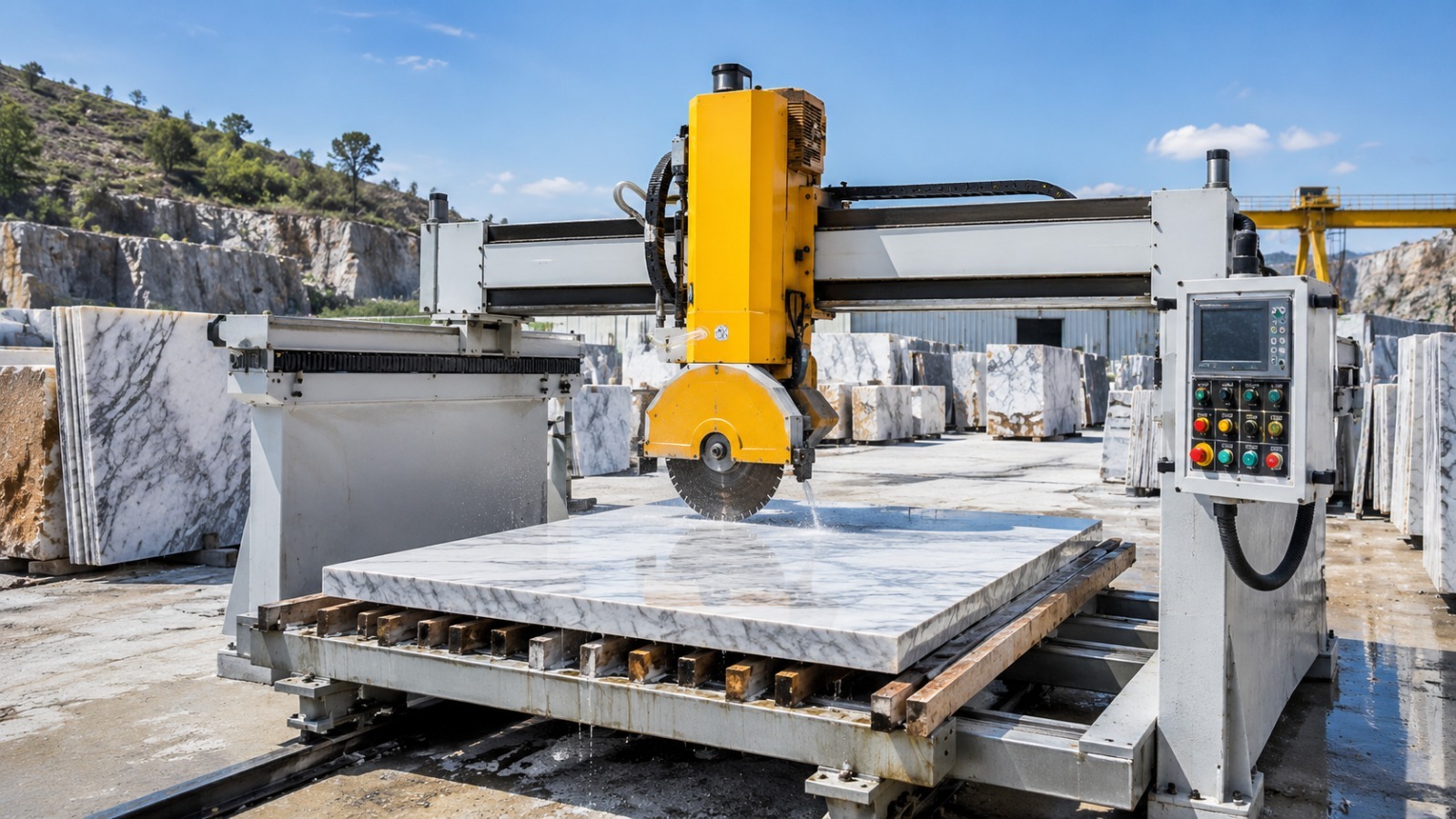
Marble Cutting Machine Buying Guide
Buying a marble cutting machine is an important decision for marble manufacturers, fabricators, contractors, quarry operators, and stone-processing businesses. The right machine can improve cutting accuracy, production efficiency, and overall workflow. However, choosing the right equipment is not always easy because different machines are designed for different applications. Before making a purchase, you should consider the type of marble you process, block size, production volume, required cutting dimensions, available space, power requirements, maintenance, safety, and after-sales support. This Marble Cutting Machine Buying Guide explains the key factors you should check before purchasing a machine so you can make a practical and informed decision.
What Is a Marble Cutting Machine?
A marble cutting machine is industrial equipment used to cut marble blocks or slabs into required sizes and dimensions. Depending on the machine type, it can be used for block cutting, slab cutting, sizing, shaping, and other stages of stone processing. For a commercial business, buying a machine only because it has a low price is not always the best approach. The machine should match your actual production requirements, working conditions, and long-term business goals.
Why Choosing the Right Marble Cutting Machine Matters
Marble processing requires consistent cutting and reliable machine performance. If the machine is not suitable for your application, it can lead to production delays, maintenance problems, inconsistent results, and unnecessary operating costs.
A properly selected machine can help with:
- Consistent cutting performance
- Better production planning
- Efficient material processing
- Reduced downtime
- Improved productivity
- Easier operation
- Long-term reliability
The goal should be to find the right balance between performance, durability, operating cost, maintenance, and service support rather than simply choosing the cheapest option.
1. Understand Your Cutting Requirements
Start by understanding exactly what you need the machine to do.
Consider:
- Type of marble being processed
- Average block size and weight
- Required cutting dimensions
- Daily production volume
- Required cutting accuracy
- Number of operators
- Available factory space
- Existing material-handling equipment
A small marble-processing unit may have very different requirements from a large production facility. Clearly defining your needs will help you select a machine that fits your operation.
2. Choose the Right Machine Type
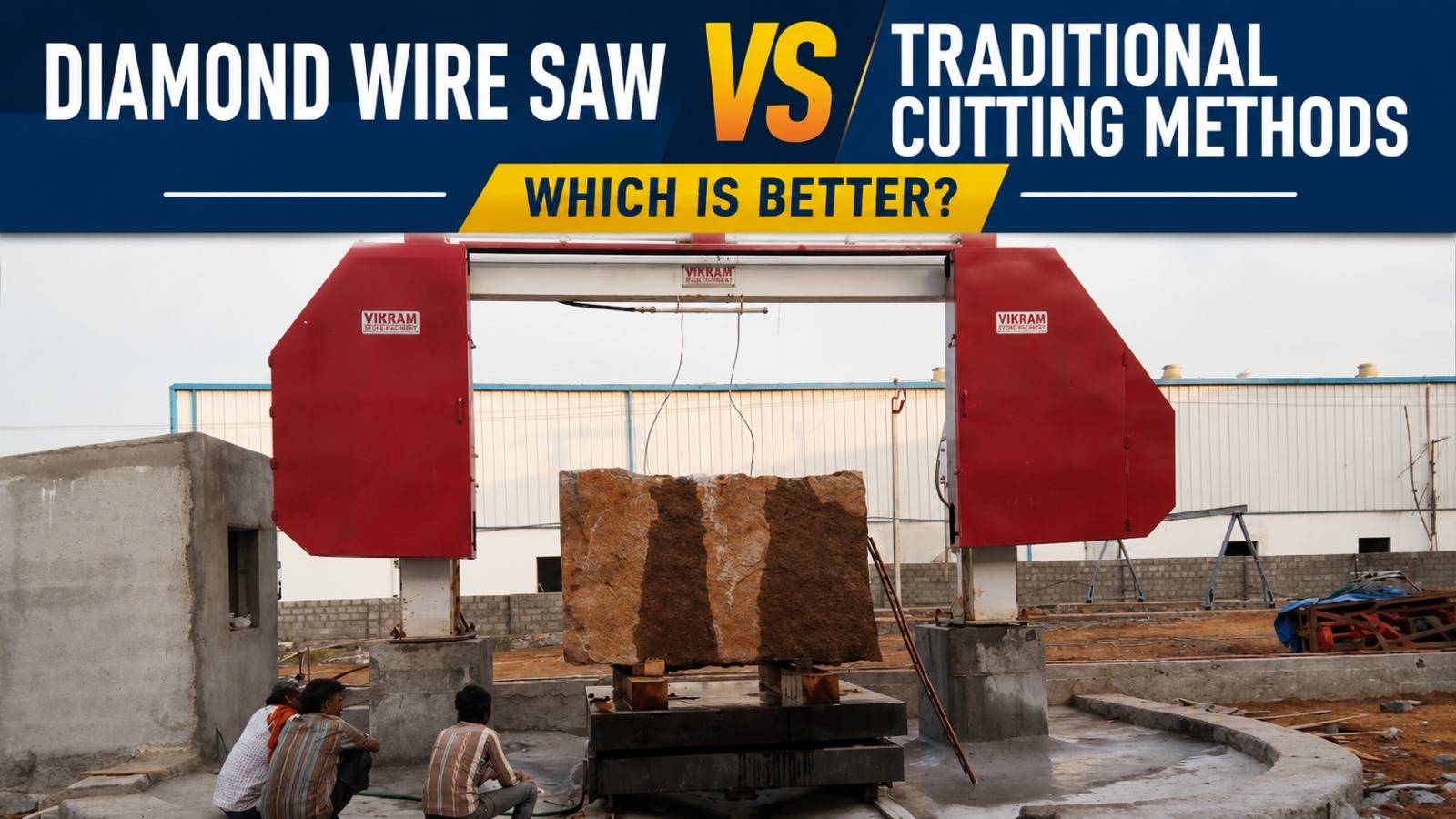
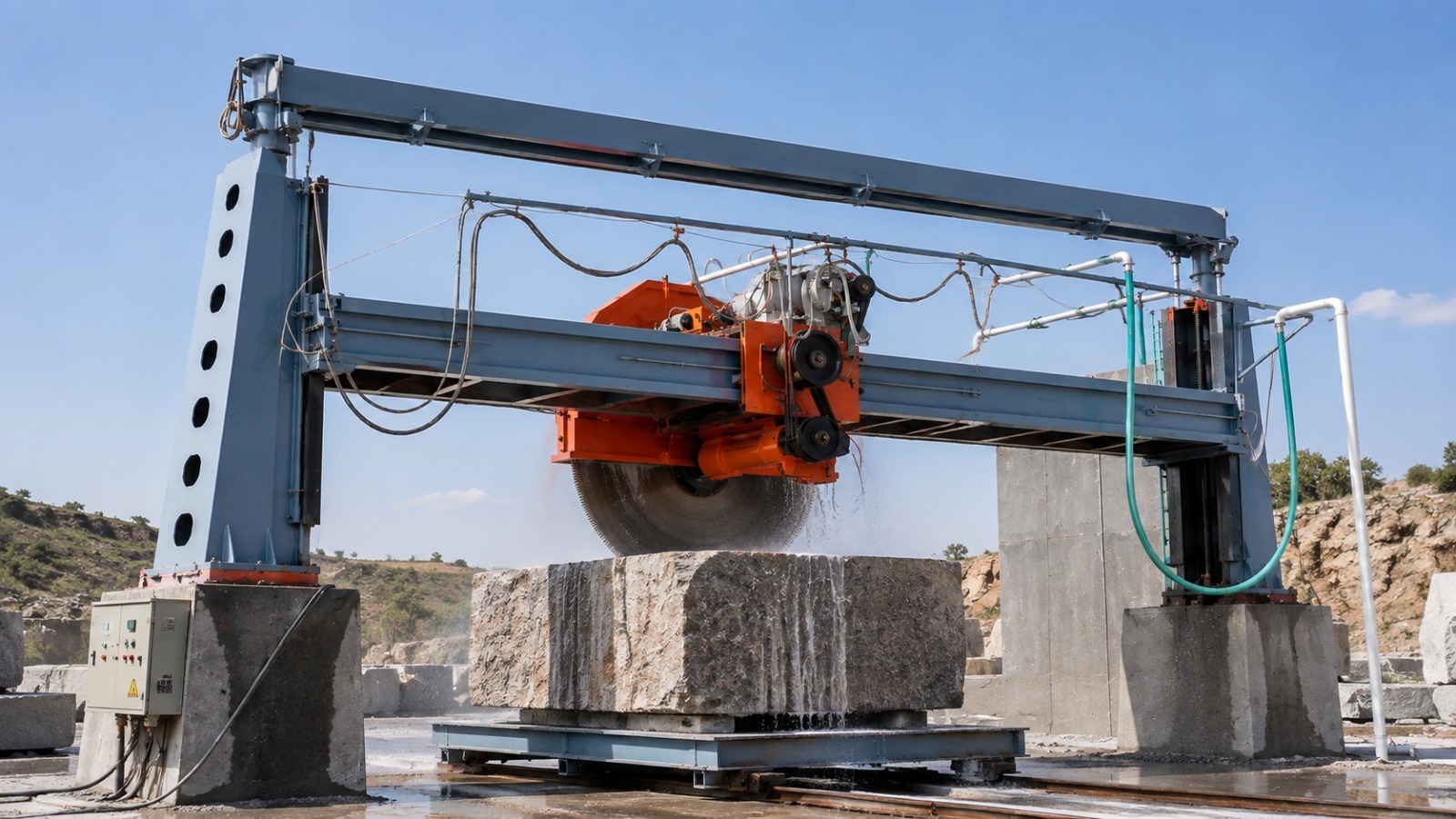
Different stone-processing applications require different types of machinery. Your choice should depend on what stage of processing you are performing. For example, block cutting machines can be used for processing large stone blocks, while diamond wire saws can provide controlled cutting for natural stone applications. Vikram Stone Machine offers equipment for granite and marble processing, including Diamond Wire Saws, Block Cutting Machines, Diamond Wire Block Dressing Machines, and other stone-processing machinery. If your business handles large stone blocks, you should also consider equipment for lifting and moving those blocks safely.
3. Check Machine Capacity
Machine capacity is one of the most important factors when buying a marble cutting machine. The machine should safely handle the size and weight of the marble blocks you normally process. A machine with insufficient capacity may limit production, while an unnecessarily large machine can increase your initial investment and operating requirements.
Ask the manufacturer about:
- Maximum block size
- Maximum load capacity
- Cutting dimensions
- Working area
- Suitable stone applications
- Production capability
Always compare the specifications of the actual machine model with your production requirements.
4. Evaluate Cutting Accuracy
Cutting accuracy is important when marble needs to be processed into consistent dimensions. Before buying, ask about:-
- Cutting precision
- Dimensional consistency
- Blade or wire stability
- Machine rigidity
- Control system
- Adjustment options
Remember that the final cutting result depends on more than the machine itself. Cutting tools, marble characteristics, machine setup, operator experience, and maintenance can also affect accuracy.
5. Check Motor Power and Energy Requirements
Power requirements should be checked before purchasing the machine. An underpowered machine may struggle with demanding work, while an unnecessarily oversized machine may increase energy and infrastructure requirements.
Discuss the following with the manufacturer:
- Motor power
- Electrical requirements
- Operating voltage
- Power consumption
- Starting requirements
- Expected operating load
Always check the specifications for the exact machine you are considering instead of assuming that every machine has the same power requirements.
6. Consider Automation and Ease of Operation
A good machine should be practical and easy for operators to use.
When comparing machines, check:
- Control panel design
- Ease of adjustment
- Operator controls
- Emergency stop functionality
- Safety controls
- Automation options
- Training requirements
Clearly arranged controls can make daily operation easier and help operators work more efficiently.
7. Check Build Quality
Marble blocks are heavy, and stone-processing machines often operate in demanding industrial environments. Build quality should therefore be an important part of your buying decision.
Look for:
- Strong machine construction
- Quality structural components
- Reliable drive systems
- Protected electrical components
- Stable cutting mechanisms
- Durable moving components
- Good-quality fabrication
Do not judge a machine only by its appearance. Ask about construction, components, serviceability, and suitability for continuous operation.
8. Understand Maintenance Requirements
Regular maintenance is essential for industrial machinery. Before purchasing, understand how easily important components can be inspected, cleaned, adjusted, lubricated, and replaced. Ask the supplier:-
- Which parts require regular maintenance?
- How often should maintenance be performed?
- Which spare parts are commonly needed?
- Are replacement parts available?
- Is technical support provided?
- Does the manufacturer offer service assistance?
Good maintenance planning can help reduce unexpected downtime and support reliable machine performance.
9. Never Ignore Safety
Safety should always be a priority when purchasing heavy industrial equipment.
Check for suitable safety features such as:
- Emergency stop controls
- Protective guards
- Limit switches where applicable
- Electrical protection
- Safe operator controls
- Proper operating procedures
Safety features can vary by machine model, so ask the manufacturer for the relevant safety and operating documentation before installation.
10. Compare Total Cost, Not Just Price
The purchase price is only one part of your overall investment.
Consider costs such as:
- Machine purchase
- Transportation
- Installation
- Electrical setup
- Cutting tools and consumables
- Operator training
- Maintenance
- Spare parts
- Downtime
- Service expenses
A machine with a higher initial price may provide better long-term value if it offers suitable productivity, reliability, and service support.
This is why you should compare the total cost of ownership, not simply choose the lowest quotation.
11. Check After-Sales Service
After-sales support can make a major difference when operating industrial machinery.
Before placing an order, ask about:
- Installation support
- Commissioning
- Operator training
- Warranty
- Spare-part availability
- Technical support
- Service response
A manufacturer that supports the machine after installation can provide greater long-term value and help reduce problems when technical assistance is required.
12. Choose an Experienced Manufacturer
Experience matters when purchasing specialized stone-processing machinery. An experienced manufacturer may have a better understanding of cutting requirements, block handling, machine configuration, installation, and maintenance. Vikram Stone Machine provides machinery for granite, marble, and natural stone applications. When comparing suppliers, look beyond the quotation and consider their product range, manufacturing experience, technical support, service capabilities, and industry knowledge.
13. Ask About Customization
Every marble-processing business has different requirements. A standard configuration may not always be the perfect fit.Ask whether the machine can be configured according to:
- Machine dimensions
- Cutting capacity
- Production requirements
- Control configuration
- Installation conditions
- Material-handling setup
Discuss customization before finalizing the quotation so the machine can be properly matched to your application.
14. Plan Installation and Material Handling
A marble cutting machine needs enough space for loading, cutting, unloading, maintenance, and safe movement. You should also plan how heavy marble blocks will be moved to and from the machine. Supporting equipment such as gantry cranes, EOT cranes, and derrick cranes may be relevant for operations that handle large stone blocks. Planning the complete workflow can make your production setup more practical and efficient.
Marble Cutting Machine Buying Checklist
Before purchasing, check:
- Marble type and application
- Required cutting dimensions
- Block size and weight
- Production volume
- Machine capacity
- Cutting accuracy
- Motor and power requirements
- Automation and controls
- Machine construction
- Safety features
- Maintenance requirements
- Spare-part availability
- Installation requirements
- Warranty and after-sales service
- Manufacturer experience
- Total cost of ownership
Common Mistakes to Avoid
Buying Only on Price
A low purchase price does not always mean lower long-term costs. Consider maintenance, downtime, energy use, spare parts, and service.
Choosing the Wrong Capacity
A machine that cannot handle your normal workload can become a production bottleneck.
Ignoring After-Sales Support
Always understand how the manufacturer will provide technical assistance after installation.
Not Checking Power Requirements
Confirm electrical requirements before installation to ensure your facility is properly prepared.
Ignoring Safety
Review the safety features and operating procedures for the exact machine before purchase and installation.
Final Thoughts
Choosing a marble cutting machine in 2026 should be based on more than price. Machine capacity, cutting accuracy, power requirements, safety, maintenance, installation, and after-sales service all deserve careful consideration. Before making your final decision, discuss your marble block size, production volume, cutting requirements, available space, and expected workload with the manufacturer. This will help you identify a machine configuration that fits your business instead of simply choosing a machine based on price.
Consider marble type, block size, production volume, machine capacity, cutting accuracy, power requirements, safety, maintenance, spare parts, installation, and after-sales support.
The best machine depends on your application, block size, production requirements, cutting dimensions, available space, accuracy needs, and budget.
Yes. The machine should safely handle the size and weight of the marble blocks used in your operation. Always check the specifications of the exact model.
After-sales service is important because industrial machinery may require installation support, maintenance, spare parts, troubleshooting, and technical assistance.
Depending on the machine model and manufacturer, customization may be possible. Discuss your required dimensions, capacity, controls, and installation conditions before placing an order.

Related Posts
This Post Has 0 Comments