Buying a marble cutting machine is an important decision for marble manufacturers, fabricators, contractors, quarry…
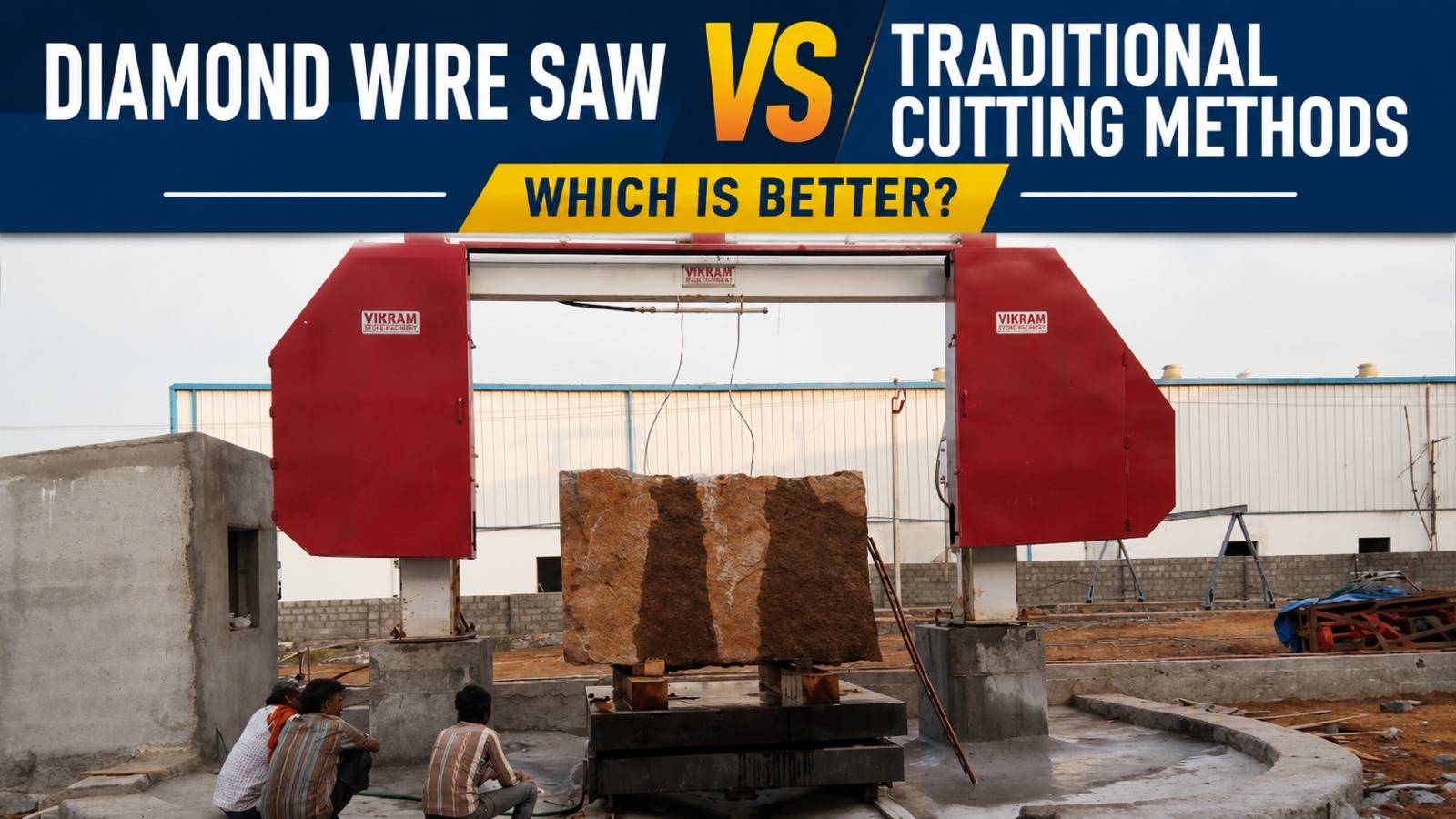
Diamond Wire Saw vs Traditional Cutting Methods: Which Is Better?
Choosing the right stone-cutting technology can directly affect cutting accuracy, production efficiency, material wastage, maintenance costs, and the quality of the finished product. For stone processors, fabricators, contractors, and manufacturers, the decision often comes down to diamond wire saw vs traditional cutting methods. Traditional cutting machines have been used successfully for decades and remain useful for standard production work. At the same time, diamond wire technology has become an important option for large, thick, irregular, and specialized cutting applications. So, which one should you choose? There is no universal answer. The better option depends on the material, block size, required cutting shape, production volume, budget, and long-term operating requirements.
What Is a Diamond Wire Saw?
A diamond wire saw is a stone-cutting machine that uses a continuous wire fitted with diamond beads to cut hard materials such as granite, marble, concrete, and other natural or engineered stones. Instead of using a large rigid blade, the machine moves the diamond wire through or around the material. The diamond segments gradually remove the stone along the required cutting path. This makes a diamond wire cutting machine particularly useful when conventional blades may have difficulty handling thick blocks, oversized sections, unusual shapes, or difficult-to-access locations. A typical system includes a diamond wire, drive wheel, guide wheels, tensioning mechanism, cooling system, and control system. Correct wire tension, alignment, cutting speed, and cooling are important for consistent performance.
What Are Traditional Stone-Cutting Methods?
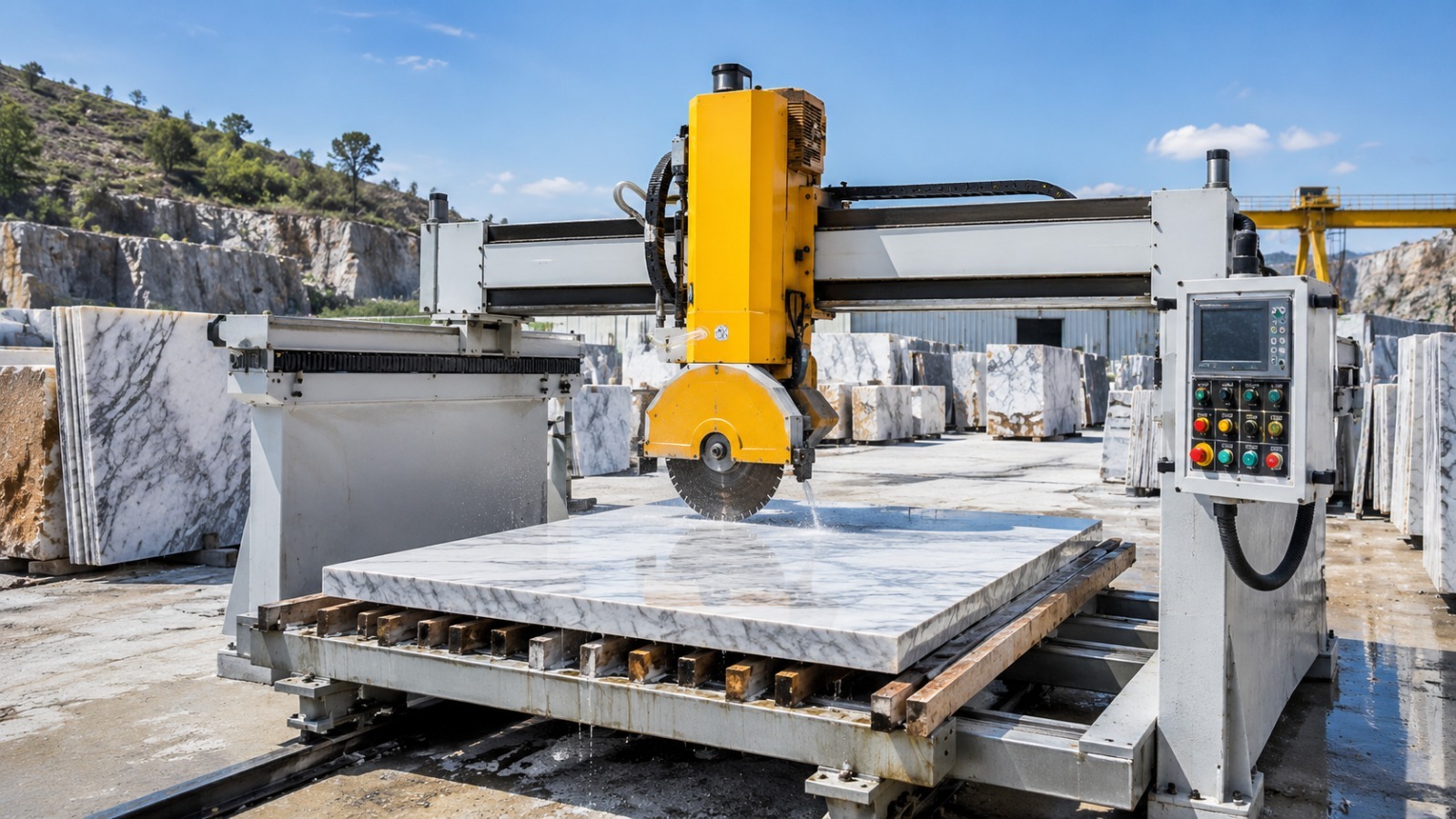
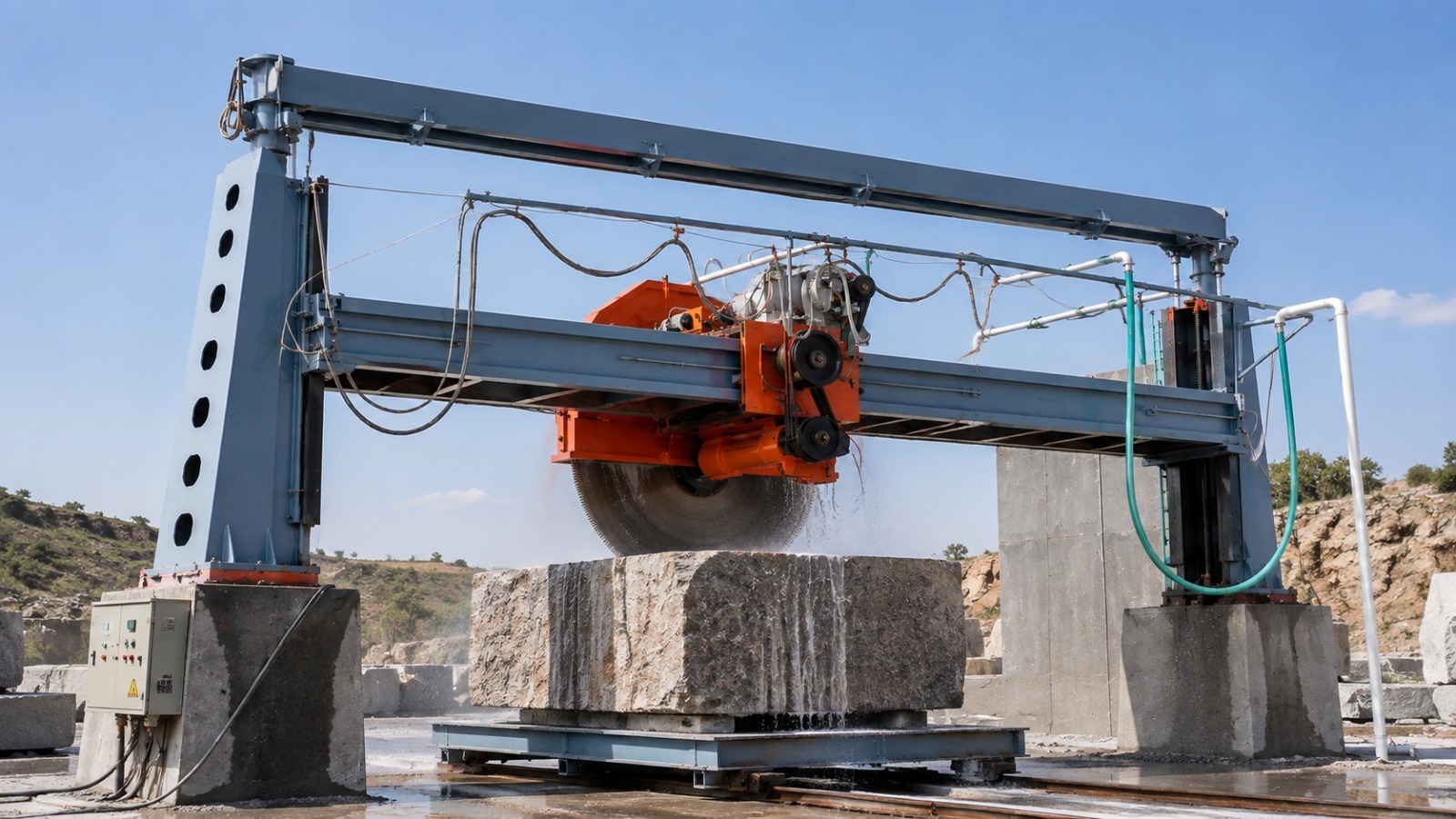
Traditional stone-cutting methods generally include circular saws, gang saws, block cutters, abrasive saws, and other blade-based equipment. These machines use one or more rotating blades to produce slabs, blocks, tiles, and other standard stone products. They are widely used because they are familiar to operators and can provide excellent productivity for repetitive, straight cutting operations. For a stone-processing business with predictable material dimensions and high-volume production requirements, conventional machinery can still be a practical choice.
Diamond Wire Saw vs Traditional Cutting Methods: Key Differences
The main difference between the two technologies is flexibility.
| Factor | Diamond Wire Saw | Traditional Cutting |
| Cutting flexibility | Very high | Moderate |
| Complex shapes | Excellent | More limited |
| Thick materials | Highly suitable | Depends on equipment |
| Material wastage | Can be lower | May be higher |
| Standard straight cuts | Suitable | Highly suitable |
| Large blocks | Excellent | Machine dependent |
| Specialized applications | Excellent | More limited |
| Maintenance | Wire and machine maintenance | Blade and machine maintenance |
The best choice depends on the complete production requirement rather than one specification alone.
Cutting Accuracy and Quality
Cutting accuracy is critical when processing valuable materials such as granite and marble. A diamond wire saw can follow customized cutting paths, making it suitable for curved, angled, irregular, and specialized cuts. This flexibility can be valuable in architectural stonework and projects where standard straight cutting is not enough. Traditional saws can also provide excellent accuracy, particularly for repetitive straight cuts. Their advantage is consistency in standardized production environments.
Therefore, if your main requirement is high-volume straight cutting, traditional machinery may be sufficient. For specialized geometry, diamond wire cutting can offer greater flexibility.
Material Wastage and Cutting Kerf
Material wastage is another important consideration when comparing diamond wire saw vs traditional cutting methods. A diamond wire can provide a relatively narrow cutting path, which may help reduce kerf-related material loss in suitable applications. This can be particularly valuable when processing expensive granite, marble, or other premium stone. Traditional blades may produce a wider kerf depending on blade design and application. However, actual material loss depends on several factors, including machine specifications, cutting parameters, operator experience, material characteristics, and consumable condition. Businesses should therefore evaluate actual material recovery rather than assuming that one technology will always produce less waste.
Cutting Large and Thick Stone Blocks
One of the strongest applications for a diamond wire saw is cutting large or thick material. Large granite blocks, oversized stone sections, reinforced concrete, and difficult-to-access structures can create challenges for rigid blade-based equipment. The flexibility of diamond wire allows it to work in applications where positioning a large blade may be impractical. Traditional machines are generally more convenient for standardized blocks, slabs, and predictable production work. For businesses handling unusual block sizes or specialized projects, diamond wire technology can provide a significant operational advantage.
Cutting Speed and Productivity
Speed is important, but it should not be the only measure of productivity. Traditional cutting machines can be extremely efficient for repetitive production. A factory producing large quantities of standard slabs may benefit from a conventional production setup designed specifically for high-volume cutting. A diamond wire saw may not always be the fastest option for every standard cut. Its main advantage is flexibility. It can perform difficult cuts that might otherwise require multiple machines, additional tooling, or more finishing work. When calculating productivity, consider setup time, material handling, finishing, rework, waste, and downtime along with cutting speed.
Operating Cost and Maintenance
The purchase price of a stone-cutting machine is only one part of the total investment. Businesses should also consider electricity, water, consumables, labor, maintenance, replacement parts, and downtime. Diamond wire saws require inspection and replacement of the diamond wire when necessary. Proper tension, alignment, cooling, and machine maintenance are important for maintaining cutting performance. Traditional equipment requires maintenance of blades, motors, bearings, drive systems, cooling systems, and other components. The most useful comparison is therefore total cost of ownership, not simply the initial machine price.
Diamond Wire Saw for Granite and Marble
Granite is a hard natural stone that requires suitable cutting equipment. Traditional circular and multi-blade systems can be highly effective for standard granite slab production. However, when a granite block is unusually large, thick, irregular, or requires a customized cut, a diamond wire saw for granite can provide greater flexibility. Marble can also be processed using both technologies. Traditional machines are suitable for standard slabs and tiles, while diamond wire equipment becomes attractive for large blocks, unusual shapes, and specialized architectural applications. The material alone should not determine the machine choice. Production requirements are equally important.
When Should You Choose a Diamond Wire Saw?
A diamond wire saw may be a strong choice when you need:-
- Large or thick stone cutting
- Curved or irregular cuts
- Customized architectural shapes
- Large granite or marble blocks
- Difficult-to-access cutting
- Specialized stone fabrication
- Reinforced concrete cutting
- Greater cutting flexibility
- Better material recovery in suitable applications
When Are Traditional Cutting Methods Better?
Traditional cutting methods may be preferable when your business focuses on:-
- High-volume production
- Standard stone slabs
- Straight and repetitive cuts
- Predictable material sizes
- Established production workflows
- Standardized granite or marble processing
For these applications, conventional equipment can deliver reliable productivity without requiring the additional flexibility of a wire saw.
How to Choose the Right Stone-Cutting Machine
Before purchasing a machine, evaluate seven important factors:-
- Material Type:- Identify whether you are processing granite, marble, limestone, engineered stone, concrete, or another material.
- Material Size:- Check the maximum length, width, thickness, and weight of the material.
- Cutting Shape:- Straight cuts and complex curved cuts can require very different equipment.
- Production Volume:- High-volume standardized production may favor traditional machinery, while specialized production may benefit from diamond wire technology.
- Material Value:- For expensive stone, reducing unnecessary cutting loss can have a meaningful financial impact.
- Total Operating Cost:- Compare consumables, labor, electricity, water, maintenance, and expected machine life.
- After-Sales Support:- Consider installation, spare parts, operator training, technical assistance, and service availability before making a final decision.
Final Verdict: Which Cutting Method Is Better?
The answer to diamond wire saw vs traditional cutting methods depends on your application. Traditional cutting remains an excellent choice for standardized, repetitive, high-volume production where straight cuts are the priority. It offers a proven workflow and can deliver strong productivity in the right environment. A diamond wire saw is more attractive when flexibility, large material sizes, complex shapes, difficult cutting conditions, or material utilization are important.
For India’s growing stone-processing industry, manufacturers and contractors should compare machine capacity, cutting requirements, consumable costs, maintenance, power consumption, automation, and after-sales support before investing. The goal is not simply to choose modern technology. It is to choose the right stone-cutting technology for your specific production needs.
Need Help Choosing a Stone-Cutting Machine?
Selecting the right equipment can improve production efficiency, control material waste, and reduce unnecessary operating costs. If you are comparing a diamond wire saw, granite cutting machine, marble cutting machine, or traditional stone-cutting equipment, discuss your material and production requirements with an experienced machinery supplier. Ask about cutting capacity, machine configuration, consumable life, power requirements, installation, maintenance, training, and after-sales service before placing your order.
Not for every application. Diamond wire saws are particularly useful for large, thick, irregular, and specialized cuts, while traditional saws can be highly productive for repetitive straight cutting.
Yes. Diamond wire technology can be used for granite cutting, with the appropriate wire specification and machine settings selected for the material and application.
It can help reduce kerf-related material loss in suitable applications, but actual wastage depends on the machine, consumable, material, cutting parameters, and operator.
Traditional cutting machinery can be highly effective for standardized, repetitive production. Diamond wire equipment is generally more valuable when flexibility and specialized cutting are required.
Compare your material type, block dimensions, required cutting shape, production volume, material value, operating costs, and after-sales support before making a decision.

Related Posts
This Post Has 0 Comments