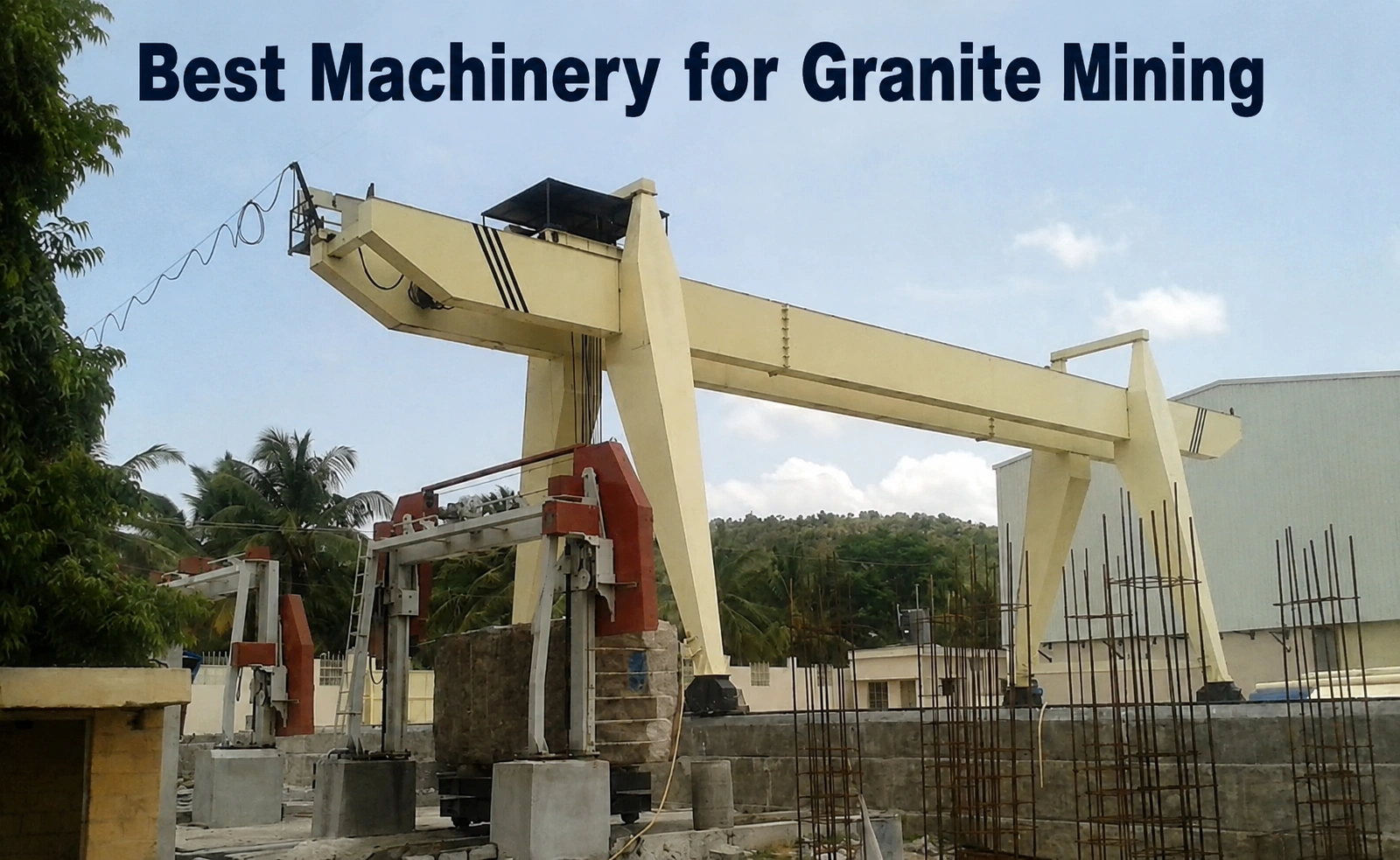
Choosing the best machinery for granite mining is not simply about selecting the most powerful…
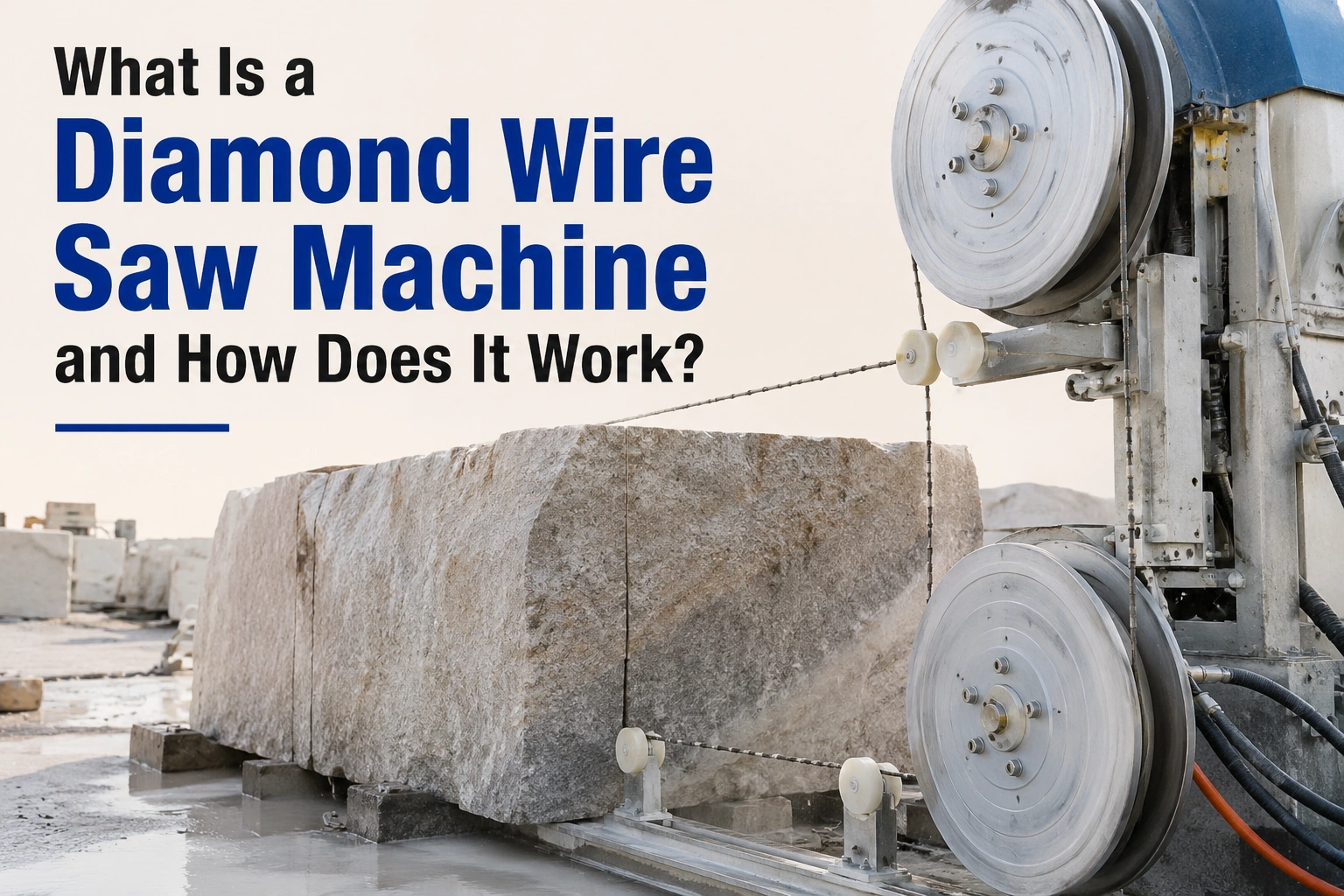
What Is a Diamond Wire Saw Machine and How Does It Work?
Cutting large granite blocks, marble, concrete, and other hard materials requires equipment that can provide precision, consistency, and efficient material utilization. A diamond wire saw machine is a specialized cutting solution designed for these demanding applications. Unlike a conventional circular saw that uses a rigid blade, a diamond wire saw uses a flexible steel wire fitted with diamond beads. The wire continuously moves around drive and guide wheels while the diamond beads gradually grind through the material. This makes the machine suitable for large, thick, unusually shaped, and difficult-to-access materials. Diamond wire saw technology is widely used in stone processing, quarrying, construction, demolition, and specialized cutting operations. Understanding how the machine works and what factors affect its performance can help businesses choose the right equipment for their requirements.
What Is a Diamond Wire Saw Machine?
A diamond wire saw machine is a cutting system that uses a steel wire fitted with diamond beads or segments to cut hard materials. Instead of pushing a large circular blade through the material, the machine continuously moves the diamond wire around its drive and guide wheels. When the diamond beads contact the material, they gradually grind through it under controlled tension and feed. This allows the machine to handle applications where conventional blades may be limited by material thickness, block size, or accessibility. Diamond wire saw machines can be used for:-
- Granite
- Marble
- Limestone
- Sandstone
- Engineered stone
- Concrete
- Reinforced concrete
- Large natural-stone blocks
The machine and diamond wire should be selected according to the material, dimensions, production requirements, and desired cutting performance.
How Does a Diamond Wire Saw Machine Work?
The working principle is straightforward. A diamond-embedded wire continuously moves through the material while controlled tension and feed allow the diamond beads to grind through the cutting area.
- Diamond Wire Installation:- The diamond wire is positioned around the machine’s drive and guide wheels. It contains multiple diamond beads that act as the primary cutting elements. Correct installation and tensioning are important for stable operation. Operators should always follow the machine and diamond wire manufacturer’s recommendations.
- Wire Movement:- An electric motor powers the drive wheel, causing the diamond wire to move continuously around the cutting path. Depending on the machine design, wire speed and feed rate can be controlled according to the cutting application. These settings may need adjustment based on material hardness, wire specification, machine capacity, and cutting conditions.
- Material Positioning:- The granite block, marble piece, concrete structure, or other material must be securely positioned before cutting begins. Proper positioning helps reduce unwanted movement and vibration and is particularly important when processing large blocks or structural components.
- Controlled Cutting:- The machine gradually feeds the moving wire into the material. Diamond beads continuously contact the surface and progressively grind through it. Cutting performance depends on material hardness, diamond wire specification, machine settings, wire tension, cooling, and operator technique.
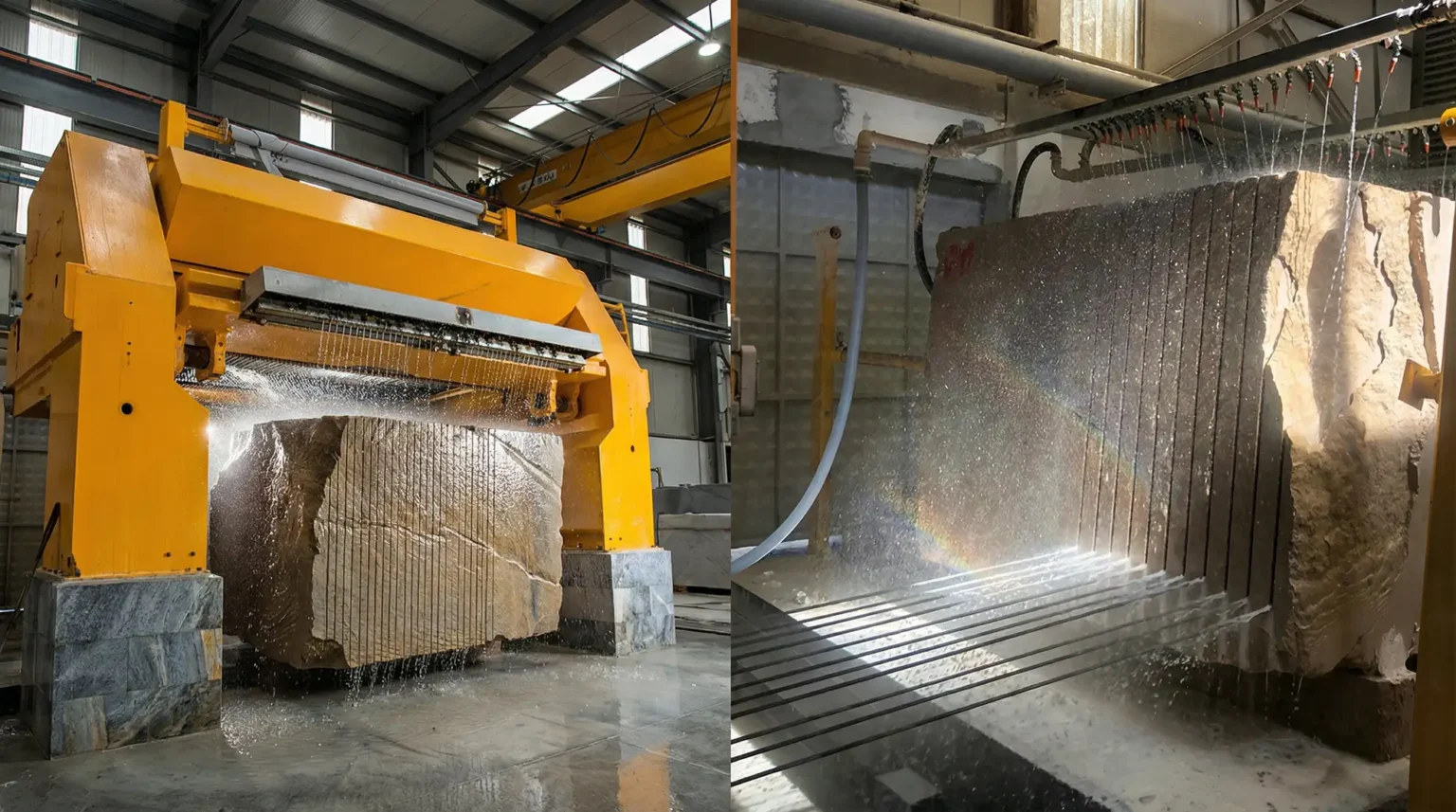
- Cooling:- Many diamond wire cutting applications use water around the cutting zone. Water helps manage heat and remove cutting debris produced during operation. Proper cooling can contribute to stable cutting conditions and consistent performance.
- Cut Completion:- The wire continues moving through the material until the required section is completely separated. The final result depends on machine configuration, wire quality, material characteristics, cooling, and operating conditions.
Main Components of a Diamond Wire Saw Machine
A typical machine contains several components that work together to provide controlled cutting.
Diamond Wire :- The diamond wire is the primary cutting element. It generally consists of a steel cable fitted with diamond beads. Diamond quality, concentration, bead design, wire diameter, and bonding can affect cutting performance and wire life.
Drive Wheel :- The drive wheel transfers movement from the motor to the diamond wire and helps maintain continuous wire movement.
Guide Wheels :- Guide wheels control the wire path and help maintain the required cutting position. Regular inspection and maintenance can support stable operation.
Motor and Drive System :- The motor provides the power needed to move the wire through the material. Depending on the machine model, variable speed and other controls may be available.
Tensioning System :- Correct wire tension helps keep the wire stable during cutting. Incorrect tension can affect performance and may contribute to premature wire wear.
Control Panel :- The control panel allows operators to manage functions such as wire movement, feed rate, and other operating parameters.
Water Cooling System :- For wet-cutting applications, the cooling system supplies water to the cutting area to help manage heat and remove cutting particles.
Why Are Diamond Wires Used for Stone Cutting?
Diamond is an extremely hard material and is widely used for cutting and grinding hard surfaces. As diamond beads move against granite or other stone, diamond particles progressively grind the material away. The relatively narrow cutting path of a wire may also help reduce material removal compared with some larger cutting tools. Actual performance, however, depends on the machine, wire specification, material, and operating conditions.
Important factors include:-
- Diamond quality
- Diamond concentration
- Wire diameter
- Bead design
- Bond type
- Material hardness
- Wire speed
- Machine power
- Cutting pressure
- Cooling conditions
Expert Tip: Do not choose a diamond wire simply because it is cheaper. The wire should match the material, machine specifications, cutting conditions, and production requirements. An unsuitable wire can affect cutting efficiency, surface quality, and overall wire consumption.
Applications of Diamond Wire Saw Machines
Diamond wire technology is suitable for several industries because it can handle large, thick, and difficult-to-cut materials.
Granite and Marble Processing :- Stone-processing companies use diamond wire systems to cut large blocks into sections or prepare them for further processing. Proper machine and wire selection can support controlled cutting and efficient material utilization. Businesses can also compare granite cutting machine and stone cutting machine solutions depending on their production requirements.
Quarrying :- Diamond wire saws can be used to separate large natural-stone blocks from rock formations. Controlled cutting can help quarry operators achieve desired block dimensions while limiting unnecessary damage.
Concrete Cutting :- Specialized diamond wire systems can cut thick concrete and reinforced concrete structures. Applications may include bridges, foundations, industrial structures, large concrete walls, demolition projects, and structural modifications.
Construction and Demolition :- Diamond wire cutting is useful when conventional blades face limitations because of material thickness, size, geometry, or restricted access.
Advantages of a Diamond Wire Saw Machine
A diamond wire saw machine offers several advantages for demanding cutting applications.
Precise Cutting:- A properly configured machine can provide controlled and consistent cutting.
Suitable for Large Materials:- Diamond wire technology is useful for large blocks and thick structures that can be difficult to process with conventional blades.
Potentially Lower Material Loss:- The relatively narrow cutting path may help reduce material removal, which can be valuable when processing expensive natural stone.
Flexible Cutting:- The wire can be arranged for different applications, providing flexibility where a fixed circular blade may be less practical.
Controlled Cutting:- Diamond wire provides a controlled abrasive cutting process compared with some impact-based methods.
Multiple Applications:- The technology can be adapted for quarrying, stone processing, concrete cutting, demolition, and specialized cutting operations.
Diamond Wire Saw vs Traditional Blade Cutting
Both technologies have their own advantages. The right choice depends on the application.
| Factor | Diamond Wire Saw | Traditional Blade |
| Large blocks | Highly suitable | Limited by blade size |
| Thick materials | Highly suitable | May require multiple operations |
| Cutting flexibility | High | Generally more fixed |
| Cutting path | Relatively narrow | Depends on blade thickness |
| Complex applications | Suitable for many applications | Can be more limited |
| Large structural cutting | Highly suitable | Can be difficult |
| Setup | Application dependent | Often simpler for standard cutting |
| Best suited for | Large, thick materials | Standard slab and section cutting |
There is no universal winner. Material type, dimensions, production volume, access conditions, accuracy requirements, and budget should all be considered.
Factors to Consider Before Buying a Diamond Wire Saw Machine
Before purchasing a machine, evaluate your complete production requirements rather than focusing only on motor power or purchase price.
Material Type :- Determine whether the machine will primarily cut granite, marble, limestone, concrete, or reinforced concrete.
Material Size :- Check the maximum block thickness, width, height, and overall dimensions the machine can handle.
Cutting Capacity :- Make sure the rated capacity matches your expected production requirements.
Wire Speed and Feed Control :- Suitable controls can provide greater flexibility for different materials and cutting conditions.
Machine Construction :-A rigid and durable structure can support stability during demanding cutting operations.
Cooling System :- For wet cutting, ensure that the machine has an appropriate water-supply and cooling arrangement.
Maintenance and Spare Parts :- Check the availability of diamond wires, bearings, guide wheels, pulleys, electrical components, and tensioning parts.
After-Sales Support :- Installation, training, troubleshooting, technical support, and spare-parts availability can significantly affect long-term machine performance.
Diamond Wire Saw Machine for Granite Cutting
Granite is a hard and abrasive natural stone, making suitable cutting equipment particularly important. A properly configured diamond wire saw machine for granite cutting can help stone manufacturers and quarry operators process large granite blocks efficiently. Before selecting equipment, consider granite characteristics, block dimensions, required cutting thickness, production volume, diamond wire specification, machine power, wire speed, cooling, automation, and maintenance requirements. For businesses in India’s stone-processing sector, local technical support and spare-parts availability should also be considered.
Diamond Wire Saw Machine in India
India has a significant natural-stone processing and quarrying industry, including activity in Rajasthan, Gujarat, Karnataka, Andhra Pradesh, and Telangana. When evaluating a diamond wire saw machine in India, purchase price should not be the only consideration. Businesses should also compare:
- Cutting capacity
- Productivity
- Energy consumption
- Wire consumption
- Maintenance requirements
- Spare-parts availability
- Technical support
- Long-term operating cost
For Rajasthan-based granite and marble businesses, reliable technical support can be especially valuable because unexpected machine downtime may affect production schedules.
Safety Tips for Operating a Diamond Wire Saw
Diamond wire saw machines contain moving mechanical components and should only be operated by trained personnel.
Important safety practices include:-
- Wear appropriate personal protective equipment.
- Keep unauthorized people away from the cutting area.
- Inspect the diamond wire before operation.
- Check guards and safety systems.
- Maintain appropriate wire tension.
- Protect electrical components from water.
- Follow the manufacturer’s operating limits.
- Stop and isolate the machine before maintenance.
- Provide proper operator training.
Always follow the manufacturer’s safety manual and applicable workplace requirements.
Final Thoughts
A diamond wire saw machine is a versatile solution for cutting hard and large materials such as granite, marble, and concrete. Its diamond-embedded wire allows controlled cutting in applications where conventional circular blades may have limitations. Choosing the right machine requires more than comparing purchase prices. Material type, block dimensions, cutting capacity, wire specifications, cooling, maintenance, operating costs, and technical support should all be evaluated. If you are planning to purchase a diamond wire saw machine for granite, marble, concrete, or other hard materials, first define your material type, block dimensions, production requirements, and desired cutting capacity.
Frequently Asked Questions
A diamond wire saw machine is a cutting system that uses a wire fitted with diamond beads to cut hard materials such as granite, marble, concrete, and other stone products.
The machine continuously moves a diamond-embedded wire around drive and guide wheels. The diamond beads grind through the material under controlled cutting conditions.
Yes. Diamond wire systems are commonly used for cutting granite blocks and other hard natural stones.
Yes. Specialized systems can cut thick concrete and reinforced concrete structures where conventional blades may not be practical.
Neither technology is universally better. Diamond wire cutting is particularly useful for large, thick, or difficult-to-access materials, while blade machines can be practical for standard cutting applications.
Wire life depends on material, wire quality, machine settings, cutting speed, cooling, tension, and operating conditions. There is no single lifespan for every application.
Consider material type, cutting dimensions, machine power, wire speed, capacity, cooling, maintenance, spare parts, automation, and after-sales technical support.

Related Posts
This Post Has 0 Comments