Choosing the best machinery for granite mining is not simply about selecting the most powerful…
Choosing the Right Gangsaw for Granite Processing
Choosing the right gangsaw for granite processing is an important decision for granite processors and stone manufacturers. The machine can directly affect slab quality, cutting accuracy, production speed, blade life, energy consumption, maintenance, and overall productivity. With many granite gangsaw machines available, choosing only by purchase price or advertised cutting speed can lead to higher operating costs. The right machine should match your granite type, block size, slab thickness, production volume, factory setup, and long-term business requirements.
What Is a Gangsaw for Granite Processing?
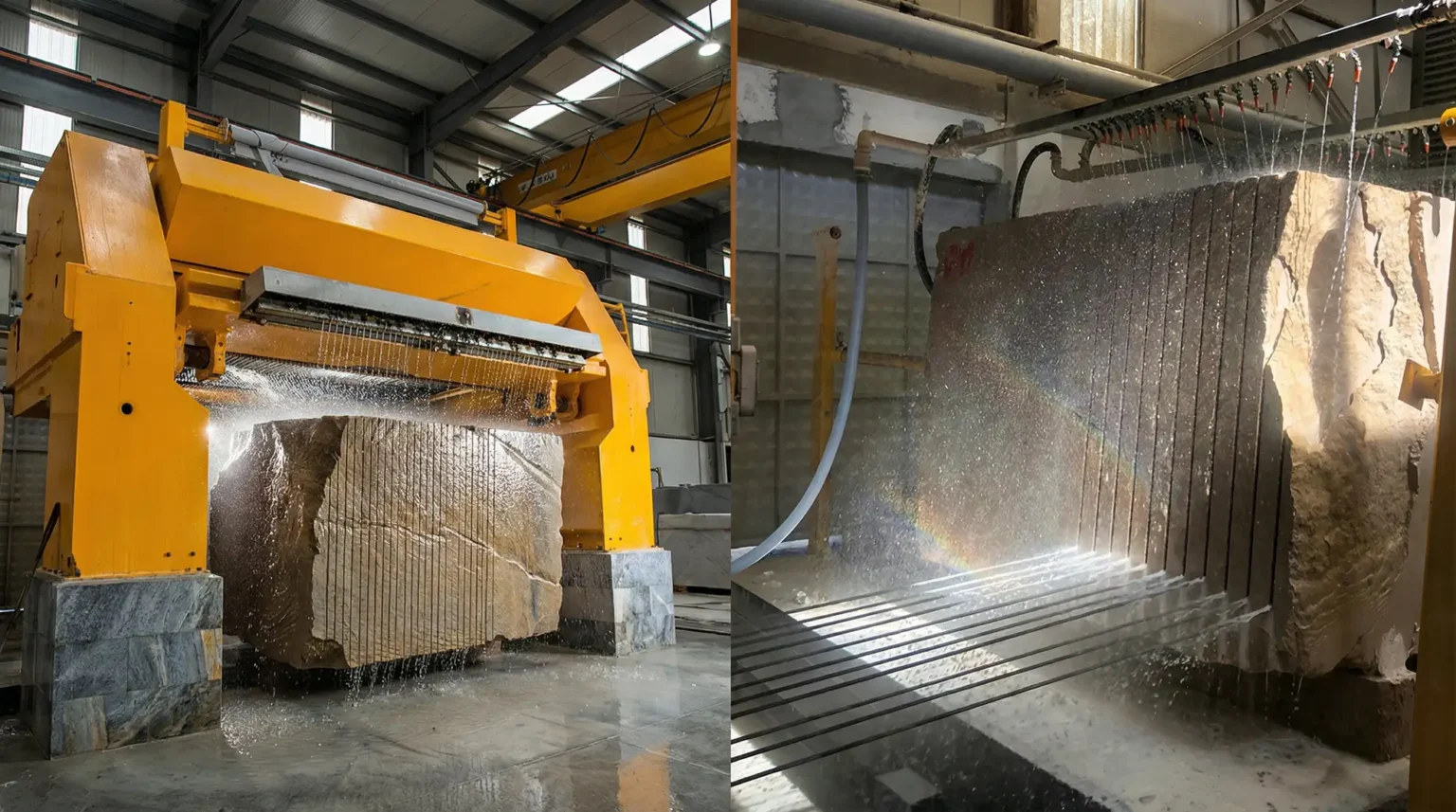
A gangsaw uses multiple blades to cut large granite blocks into several slabs during one cutting cycle. This makes it suitable for high-volume stone processing where consistent slab thickness, production efficiency, and material utilization are important. Before purchasing a granite gangsaw machine, buyers should evaluate more than basic machine specifications.
1. Consider the Type of Granite
Granite hardness, abrasiveness, mineral composition, and grain structure can affect cutting performance and blade wear. Consider:-
- Granite hardness and abrasiveness
- Mineral composition
- Block consistency
- Typical block dimensions
- Production volume
- Range of granite processed
The machine and blade system should be suitable for the granite varieties you process regularly.
2. Match the Machine to Block Size
Machine capacity should match your normal block dimensions and weight.
Check:-
- Block length
- Block width
- Block height
- Maximum block weight
- Cutting depth
- Finished slab dimensions
A machine that is too small can restrict production, while unnecessary capacity may increase investment and operating costs.
3. Choose the Required Slab Thickness
Your granite slab cutting machine should provide accurate and repeatable thickness control. Check blade spacing, thickness adjustment, cutting accuracy, blade stability, and control systems. Consistent slab thickness can reduce downstream processing and material waste.
4. Evaluate Cutting Speed and Production
Higher cutting speed does not automatically mean better performance. Speed should be balanced with slab quality, blade life, machine stability, and energy consumption.
Compare:-
- Cutting capacity
- Recommended cutting speed
- Production per cycle
- Blade configuration
- Operating conditions
The best gangsaw machine for granite should deliver reliable production at a sustainable operating cost.
5. Check Blade Compatibility
Blades have a major effect on gangsaw performance. Check blade dimensions, spacing, tensioning, replacement procedures, expected blade life, and availability. Always confirm which gangsaw blade for granite is recommended for your application.
6. Check Machine Frame and Stability
A strong and rigid frame helps maintain alignment and control vibration during granite cutting. Evaluate frame rigidity, blade support, drive system, vibration control, mechanical alignment, and overall build quality. A stable stone gangsaw machine can support consistent slab production and reduce unnecessary component wear.
7. Evaluate Blade Tensioning
Correct blade tension is essential for stable cutting. Poor tension can contribute to vibration, uneven cutting, and reduced accuracy. Ask how blade tension is applied, monitored, adjusted, and maintained throughout the cutting cycle.
8. Consider Automation and Controls
Modern controls can improve production consistency and reduce manual intervention. Useful features may include:-
- Programmable cutting cycles
- Automatic feed control
- Digital monitoring
- Automatic positioning
- Parameter management
- Fault detection
Choose automation that provides measurable benefits instead of paying for unnecessary features.
9. Evaluate Energy Efficiency
Energy consumption can significantly affect long-term operating costs. Consider motor efficiency, hydraulic efficiency, drive systems, pump requirements, cutting-cycle efficiency, and standby consumption. Compare the amount of granite processed against energy consumption rather than looking at motor power alone.
10. Check Cooling and Water Management
Granite cutting generates heat and stone slurry, making cooling and water management important. Check:-
- Water flow
- Blade cooling
- Water circulation
- Slurry management
- Drainage
- Cleaning requirements
Good cooling can support blade performance and simplify maintenance.
11. Consider Maintenance and After-Sales Support
Before buying, ask about maintenance intervals, lubrication, wear parts, spare-parts availability, installation, operator training, warranty, and service response. Reliable technical support can reduce downtime and help maintain consistent machine performance.
12. Prioritize Safety
A granite gangsaw should include appropriate safety features for its operating environment. Look for emergency stops, protective guards, safety interlocks, controlled access, operator controls, and fault indicators. Operators should also receive proper training and follow the manufacturer’s safety procedures.
13. Compare Total Cost of Ownership
The purchase price is only one part of the investment.
Total Cost = Machine + Installation + Blades + Energy + Water + Maintenance + Spare Parts + Labor + Downtime
A lower-priced machine may cost more over time if it consumes more energy, requires frequent repairs, uses expensive blades, or creates excessive downtime.
14. Match Production Volume
Consider daily and monthly production, number of shifts, machine utilization, available labor, and future growth. Choose equipment that meets current requirements while providing reasonable room for expansion.
15. Evaluate Slab Quality
A good granite slab processing system should support:
- Consistent thickness
- Accurate dimensions
- Controlled surface variation
- Reliable cutting quality
- Efficient material utilization
Better slab quality can reduce corrective work and improve the value of finished material.
16. Check Cutting Accuracy and Tolerance
Cutting accuracy is important because inconsistent slab dimensions can increase processing and finishing requirements. Ask about expected slab thickness tolerance, cutting consistency, blade alignment, feed accuracy, vibration control, and quality-control procedures. Whenever possible, request technical specifications or production references rather than relying only on marketing claims.
17. Evaluate Installation Requirements
A gangsaw is a significant industrial machine, so installation requirements should be considered before purchase. Check:-
- Required floor space
- Foundation requirements
- Electrical supply
- Water supply
- Drainage
- Crane or lifting requirements
- Installation time
- Commissioning requirements
Understanding these requirements early can prevent unexpected costs and delays.
18. Calculate Production Cost Per Slab
Production volume alone does not determine profitability. Estimate the cost of producing each slab by considering machine depreciation, blade consumption, electricity, water, labor, maintenance, spare parts, downtime, and material loss. This provides a better basis for comparing machines based on actual business value.
19. Check Machine Footprint and Factory Layout
Before purchasing a granite gangsaw machine, make sure your factory has enough space for installation, operation, loading, unloading, and maintenance. Consider machine dimensions, block-handling space, operator access, maintenance clearance, and material movement. A suitable layout can improve workflow and make daily operation easier.
20. Evaluate Hydraulic System Performance
The hydraulic system can influence machine movement, positioning, and operating stability. Check hydraulic capacity, pump performance, pressure control, component quality, leakage protection, and maintenance requirements. A dependable hydraulic system can help support smooth operation and reduce unexpected interruptions.
21. Check Spare Parts Availability
Spare-parts availability is an important factor when selecting a gangsaw for granite processing. Ask about bearings, hydraulic components, drive components, sensors, electrical parts, wear parts, and replacement blades. Easy access to critical spare parts can reduce repair time and help keep production running.
22. Consider Operator Training and Ease of Use
A technically advanced machine is most effective when operators know how to use it correctly. Ask the manufacturer about operator training, control-panel operation, machine setup, cutting parameter adjustment, safety training, and troubleshooting guidance. Simple controls and proper training can improve productivity while reducing operating mistakes.
23. Evaluate Future Upgrade Options
Your production requirements may increase over time. Therefore, consider whether the machine can support future upgrades. Check for possible control-system upgrades, automation improvements, monitoring features, software updates, and production-capacity improvements. Upgrade potential can help extend the usefulness of the machine as your business grows.
24. Ask for Machine Performance Data
Before making a final purchase decision, request detailed technical information from the manufacturer. Useful information includes:-
- Recommended granite types
- Cutting capacity
- Production cycle information
- Blade specifications
- Energy requirements
- Water requirements
- Maintenance schedule
- Warranty terms
- Spare-parts availability
- Installation and training details
If possible, compare performance information from applications similar to your own production environment.
Common Mistakes to Avoid
Do not choose a gangsaw only by purchase price or advertised cutting speed. Common mistakes include:-
- Ignoring blade costs
- Underestimating maintenance
- Choosing insufficient block capacity
- Overlooking energy consumption
- Failing to check water requirements
- Ignoring installation requirements
- Not checking spare-parts availability
- Choosing equipment without considering future production
- Focusing on speed while overlooking slab quality
The right machine should balance performance, quality, reliability, and operating cost.
How to Choose the Best Gangsaw for Your Granite Business
Start by defining your granite types, block dimensions, slab thickness, production targets, and quality expectations.
Then compare:-
- Machine capacity
- Blade systems
- Cutting accuracy
- Production speed
- Automation
- Energy efficiency
- Cooling and water management
- Maintenance requirements
- Safety features
- Installation requirements
- Spare-parts availability
- Operator training
- Total cost of ownership
- Future upgrade potential
Before making a final decision, request detailed specifications from the manufacturer and compare them with your actual operating conditions.
Final Thoughts
Choosing the right gangsaw for granite processing is a long-term investment. The best machine is not simply the cheapest or fastest. It should match your granite, block size, slab requirements, production volume, quality expectations, factory setup, and operating conditions. A well-matched granite gangsaw machine can support consistent slab quality, efficient production, better material utilization, and predictable operating costs. Take the time to compare machine specifications, blade compatibility, cutting accuracy, energy use, maintenance, installation requirements, spare-parts availability, operator training, and after-sales support. A careful evaluation can help you select a gangsaw that delivers reliable performance today while supporting the future growth of your granite processing business.
Frequently Asked Questions
A gangsaw is used to cut large granite blocks into multiple slabs during a single cutting cycle. It is commonly suited to high-volume slab production.
Start with your granite type, block dimensions, required slab thickness, production volume, blade requirements, energy use, maintenance needs, and budget. Then compare machines against these requirements.
No. Cutting speed should be balanced with slab quality, blade life, machine stability, energy consumption, and operating cost.
Consider total cost of ownership, including installation, blades, energy, water, maintenance, spare parts, labor, downtime, warranty, and technical support.
Technical support, spare parts, installation help, and operator training can reduce downtime and help maintain reliable machine performance over its working life.
The correct blade system affects cutting performance, wear, slab quality, and operating cost. Always confirm compatibility with the granite you process.

Related Posts

This Post Has 0 Comments